 Electric Grain Mills
Which electric grain mill should you choose for home baking?
The Mockmill 100 is a good electric grain mill for home baking if you make one or two loaves at a time. The 200 halves the milling time for the same weight of wheat.
Compare the mills
Which mill fits your kitchen?
The NutriMill Classic fits a narrow counter if you have room in front to pull out the flour bin. The WonderMill needs space beside the mill for its canister.
| Mill | Grinding mechanism | Best fit |
|---|---|---|
| Mockmill 100 | Millstones | One or two loaves at a time |
| Mockmill 200 | Millstones | Larger batches of bread flour |
| NutriMill Classic | Impact | Larger batches of bread flour |
| NutriMill Harvest | Millstones | Flour and cracked grain |
| WonderMill Electric | Impact | Larger batches of bread flour |
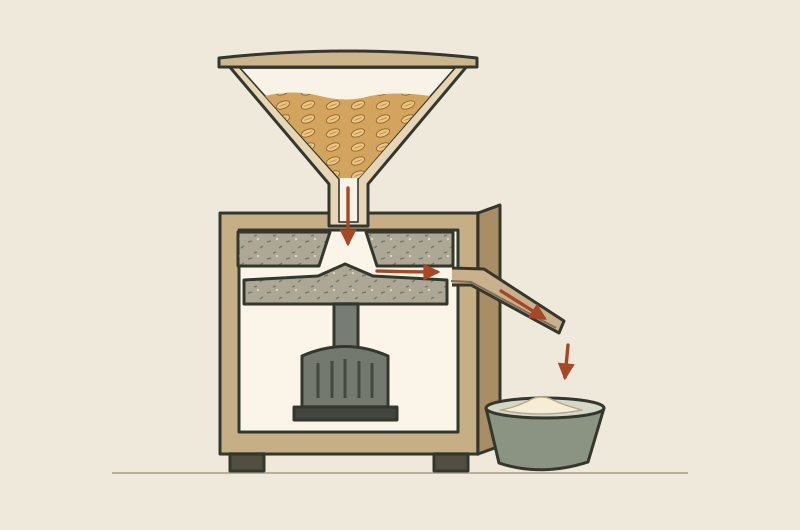
How do you check whether a mill can handle your grain?
You check whether a mill can handle your grain by looking up the exact variety in its manual. A mill designed for dry wheat can clog on oily seeds. For soaked corn, look for a mill approved for wet milling.
How do you calculate milling time for one batch?
You calculate milling time for one batch by dividing the grain weight in grams by the mill’s rated output in grams per minute. At 100 g per minute, 500 g of wheat takes about five minutes. Allow extra time for setup and cleaning.
How much clearance does a grain mill need?
A grain mill needs enough clearance above the hopper to lift the lid and pour in grain. Check its height against the bottom of your cabinets. A stone mill also needs room for a bowl under the spout. A separate flour canister needs space beside the mill.
When should you choose a KitchenAid attachment over a NutriMill Classic?